Advanced manufacturing, eco-compliance in textiles, and oil & gas applications position South Korea as a high-growth glyoxal market through 2036
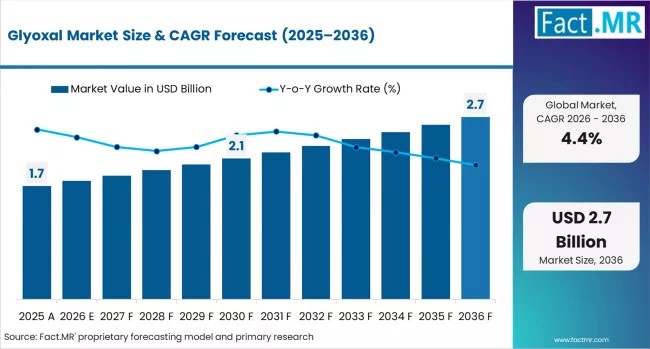
ROCKVILLE, MD, UNITED STATES, April 14, 2026 /EINPresswire.com/ — The South Korea glyoxal market is entering a high-value growth phase, supported by the country’s advanced industrial base and sustainability-driven chemical adoption. Within the broader global glyoxal market valued at USD 1.73 billion in 2026, South Korea is projected to expand at a CAGR of 4.8% through 2036, outperforming the global average of 4.4%.
Driven by rising demand across textile finishing, paper packaging, and oil & gas processing, South Korea’s glyoxal consumption is expected to grow steadily, contributing significantly to the global forecast value of USD 2.67 billion by 2036, creating an incremental opportunity of approximately USD 0.94 billion globally.
Get detailed market forecasts, competitive benchmarking, and pricing trends: https://www.factmr.com/connectus/sample?flag=S&rep_id=880
Quick Stats: South Korea Glyoxal Market
Market Size (2026): USD 1.73 Billion (Global Benchmark)
Market Size (2027): USD 1.80 Billion (Estimated)
Forecast Value (2036): USD 2.67 Billion
CAGR (2026–2036): 4.8% (South Korea)
Incremental Opportunity: USD 0.94 Billion (Global)
Leading Segment: Cross-Linking Polymer (72% share)
Leading End-use: Textile (26% share)
Key Players: BASF SE, Huntsman Corporation, Dow Chemical, Eastman Chemical, Oxea GmbH
Executive Insight for Decision Makers
South Korea’s glyoxal market is transitioning from volume-driven demand to performance- and compliance-driven procurement.
Strategic Shift: Manufacturers are prioritizing low-toxicity, high-efficiency glyoxal formulations aligned with environmental standards.
Action Imperative:
Invest in energy-efficient catalytic oxidation technologies
Establish dual-supplier sourcing strategies to mitigate supply risks
Expand into bio-based and water-based glyoxal variants
Risk of Inaction:
Margin erosion due to feedstock volatility
Regulatory non-compliance in export markets
Supply chain disruptions from overdependence on single suppliers
Market Dynamics
Key Growth Drivers
Strong demand from textile finishing sector for wrinkle-resistant, low-formaldehyde fabrics
Expansion of paper & packaging industry driven by e-commerce and sustainable materials
Rising use in oil & gas H₂S scavenging systems
Government push toward green and low-toxicity chemicals
Key Restraints
Volatility in ethylene glycol feedstock prices
Availability of alternative chemistries (e.g., triazines)
High energy intensity in production processes
Emerging Trends
Adoption of bio-based glyoxal derivatives
Integration of AI and automation in chemical production
Strategic R&D collaborations between chemical firms and textile producers
Growing demand for formaldehyde-free textile processing solutions
Segment Analysis
Leading Segment:
Cross-linking polymer application dominates with 72% market share, driven by its critical role in textile and paper industries
Leading End-use:
Textile sector (26%), supported by South Korea’s advanced fabric processing capabilities
Fastest-Growing Segment:
Paper & packaging, projected to expand at ~5.9% CAGR, driven by sustainable packaging demand
Strategic Importance
Cross-linking applications ensure durability, moisture resistance, and compliance
Packaging applications align with global sustainability mandates
Supply Chain Analysis (Critical Insight)
Value Chain Structure
Raw Material Suppliers
Ethylene glycol and acetaldehyde producers (petrochemical companies)
Manufacturers / Producers
Specialty chemical companies producing glyoxal via catalytic oxidation
Distributors
Regional chemical distributors supplying to industrial clusters
End-Users
Textile mills
Paper & packaging manufacturers
Oil & gas operators
Personal care companies
Who Supplies Whom
Petrochemical firms → supply feedstock to glyoxal producers
Glyoxal manufacturers → supply formulations to textile and paper industries
Distributors → bridge logistics gaps across industrial zones
End-users → integrate glyoxal into finishing, strengthening, or scavenging processes
Key Insight
South Korean buyers are increasingly adopting multi-supplier sourcing strategies to avoid disruptions during plant shutdowns or maintenance cycles.
Pricing Trends
Commodity vs Premium:
Standard glyoxal solutions operate as commodity chemicals
High-purity, eco-compliant variants command premium pricing
Key Price Influencers:
Feedstock (ethylene glycol) cost fluctuations
Energy costs in catalytic oxidation
Regulatory compliance and certifications
Margin Insights:
Producers face margin pressure during feedstock spikes
Long-term contracts help stabilize pricing
Regional Analysis
Top Growth Countries (CAGR 2026–2036)
China: 5.2% – Large-scale industrial demand
South Korea: 4.8% – High-tech and sustainable manufacturing
France: 4.7% – Green chemistry adoption
Italy: 4.6% – Textile and leather demand
UK: 4.5% – Sustainable packaging growth
Developed vs Emerging Markets
Developed markets focus on regulatory compliance and innovation
Emerging markets emphasize cost efficiency and volume growth
South Korea stands out by combining advanced manufacturing with sustainability leadership.
Competitive Landscape
Market Structure: Moderately consolidated with strong global players
Key Companies
BASF SE
Huntsman Corporation
Dow Chemical Company
Eastman Chemical Company
Oxea GmbH
Competitive Strategies
Investment in green chemistry technologies
Expansion in Asia-Pacific markets
Development of low-toxicity formulations
Strengthening distribution networks
Strategic Takeaways
For Manufacturers
Invest in energy-efficient production technologies
Develop bio-based product portfolios
For Investors
Focus on ESG-aligned chemical companies
Target firms with Asia-Pacific expansion strategies
For Marketers & Distributors
Highlight compliance and sustainability benefits
Build localized supply networks
Future Outlook
The South Korea glyoxal market is expected to evolve into a high-performance specialty chemical segment, driven by:
Adoption of green chemistry and circular economy principles
Technological advancements in low-emission production processes
Rising demand from next-generation textiles and packaging materials
Long-term opportunity lies in bio-based glyoxal and advanced application development.
Conclusion
South Korea is emerging as a strategic growth engine within the global glyoxal landscape, combining industrial sophistication with sustainability-driven demand. Companies that align with regulatory trends, invest in innovation, and secure resilient supply chains will capture the most value in this evolving market.
Why This Market Matters
Glyoxal is no longer a commodity chemical—it is becoming a critical enabler of sustainable industrial transformation. From eco-friendly textiles to recyclable packaging and cleaner oilfield operations, its role is expanding rapidly.
For decision-makers, the message is clear: adapt to green chemistry trends or risk losing competitive relevance in a compliance-driven global market.
Unlock 360° insights for strategic decision making and investment planning: https://www.factmr.com/checkout/880
To View Related Report:
Rubber to Metal Bonding Agents Market https://www.factmr.com/report/1187/rubber-metal-bonding-agents-market
UV Cured Adhesives Market https://www.factmr.com/report/1188/uv-cured-adhesive-market
Bio-Based Acetic Acid Market https://www.factmr.com/report/1189/bio-based-acetic-acid-market
Bio-based Surfactants Market https://www.factmr.com/report/1191/bio-based-surfactants-market
About Fact.MR
Fact.MR is a global market research and consulting firm, trusted by Fortune 500 companies and emerging businesses for reliable insights and strategic intelligence. With a presence across the U.S., UK, India, and Dubai, we deliver data-driven research and tailored consulting solutions across 30+ industries and 1,000+ markets. Backed by deep expertise and advanced analytics, Fact.MR helps organizations uncover opportunities, reduce risks, and make informed decisions for sustainable growth.
S. N. Jha
Fact.MR
+ +1 628-251-1583
sales@factmr.com
Legal Disclaimer:
EIN Presswire provides this news content “as is” without warranty of any kind. We do not accept any responsibility or liability
for the accuracy, content, images, videos, licenses, completeness, legality, or reliability of the information contained in this
article. If you have any complaints or copyright issues related to this article, kindly contact the author above.

Media gallery