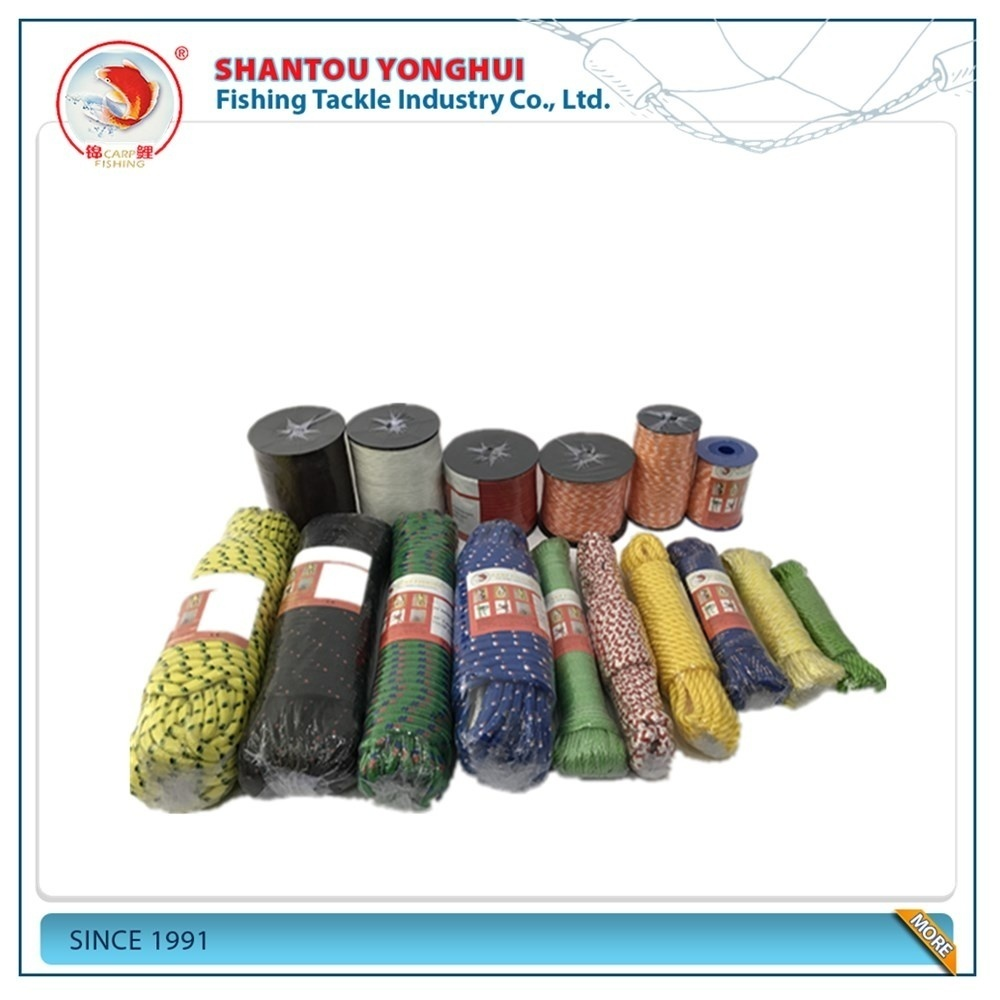
SHANTOU, GUANGDONG, CHINA, November 19, 2026 /EINPresswire.com/ — Operating commercial harvest vessels requires dependable cordage engineered to endure heavy cyclic loads, dynamic marine shock, and severe deck abrasion. Securing a reliable fishing ropes supply for commercial fleets allows fleet managers to maintain vessel readiness, protect crew safety, and prevent costly gear failures during demanding offshore harvesting campaigns.
Port captains, marine superintendents, and gear sourcing directors recognize that rope performance governs overall harvesting productivity. Sourcing task-specific marine ropes alongside complementary netting, twines, and deck gear creates a unified procurement program that simplifies port replenishment and lowers lifecycle operational costs.
Aligning Marine Cordage Selection with Commercial Vessel Duties
Commercial fishing vessels deploy cordage across diverse onboard systems where mechanical stresses, elongation requirements, and environmental exposures vary widely. Specifying marine ropes effectively requires port engineers to identify the exact operational duty before evaluating polymer materials and strand configurations.
Active Trawl Framing and Towing Lines: Headropes and footropes engineered with low-elongation synthetic fibers to preserve net geometry under dynamic hydrodynamic drag, preventing mesh distortion during high-speed towing.
Pot, Trap, and Longline Groundlines: Buoyant, abrasion-resistant polyolefin ropes that float slightly off rocky sea bottoms to prevent snagging during intensive hydraulic hauler retrieval cycles in coastal waters.
Harbor Mooring Lines and Docking Hawsers: Controlled-elasticity synthetic lines designed to absorb wave surge and wind shocks without damaging deck cleats or transferring sudden impact loads to vessel hulls.
Deck Hoisting, Brailers, and General Utility: Flexible, UV-stabilized ropes engineered for predictable manual handling on motorized deck machinery, winches, and boom guys during active catch processing.
Clear communication between vessel engineers and gear fabricators prevents misapplied cordage that can jeopardize offshore harvesting operations. Selecting task-specific line constructions ensures balanced mechanical response across all shipboard rigging systems.
Mechanical Factors That Govern Fleet Rope Procurement
Selecting commercial fleet cordage involves evaluating objective physical factors rather than generic trade labels. Technical sourcing teams analyze minimum breaking strength, working load limits, elongation curves, and machinery compatibility to ensure cordage delivers dependable service life under harsh sea conditions.
Tensile Tenacity and Working Load Safety Margins
Fleet operators must establish clear safety factor ratios between catalog tensile ratings and actual operational working loads. Dynamic marine acceleration, water absorption, and continuous bending fatigue degrade nominal strength, requiring conservative safety margins between five-to-one and ten-to-one depending on the specific vessel duty. Accounting for dynamic wave surges prevents unexpected rope failure when commercial vessels operate in heavy sea states.
Tensile elongation characteristics dictate how cordage responds to sudden sea shocks. Polyamide nylon provides high elastic elongation and shock absorption, protecting gear from dynamic wave impacts. In contrast, polyester and specialized polyolefin blends deliver minimal stretch, maintaining precise gear alignment under sustained towing tension. Controlled elongation prevents sudden shock loads from breaking deck machinery mountings during extreme vessel pitching.
Buoyancy Dynamics and Deck Machinery Compatibility
Hydrodynamic buoyancy directly affects line handling and gear tracking. Lightweight polypropylene cordage floats on the water surface, keeping pot lines clear of bottom hazards. Conversely, high-density polyester and treated nylon lines sink steadily, ensuring sub-surface stability and preventing line fouling around vessel propulsion propellers. Selecting ropes with predictable water absorption rates ensures stable handling weights and prevents crew fatigue during long voyages.
Deck machinery compatibility represents another essential procurement criterion. Rope diameter, lay firmness, and surface friction must match winch drum dimensions, capstan heads, and block sheaves. Improperly sized ropes experience severe crushing, fiber glazing, and accelerated core degradation on motorized hauling machinery. Periodic sheave inspections ensure groove surfaces remain smooth and free of burrs that cause premature line abrasion.
Distinguishing Specialized Fleet Cordage from General Utility Lines
Commercial procurement teams must maintain clear technical boundaries between heavy-duty commercial fishing cordage and general utility packaging strings. Commercial harvesting vessels operate in hazardous offshore environments where cordage failure risks catastrophic gear loss and endangers deck crew safety.
Heavy-Duty Marine Construction Standards
Heavy-duty commercial fleet cordage incorporates multi-strand twisted or braided synthetic constructions engineered with marine protective finishes, balanced fiber lays, and verified tensile ratings. These industrial ropes withstand continuous immersion in saltwater, heavy UV radiation, and high-load friction across steel gunwales. Advanced marine lubricants applied during fiber twisting reduce internal yarn friction and extend rope working life.
Prohibiting Agricultural Twine in Marine Applications
General utility packaging strings consist of lightweight, uncalibrated polyolefin strands designed strictly for land-based agricultural bundling, box tying, and light shore packaging. These products lack the tensile consistency, abrasion resistance, and splice security required for marine gear fabrication or shipboard rigging. Using lightweight packing twine in marine applications risks sudden gear parting and costly catch loss under sea loads.
Strictly prohibiting the substitution of utility string into critical vessel rigging protects maritime safety and ensures full compliance with port inspection standards. Fleet procurement managers require delivered cordage to carry certified tensile test documentation matching commercial marine specifications. Procurement records should document verified break testing and fiber origin for every coil deployed aboard commercial vessels.
Practical Advantages of a Multi-Category Fleet Supply Program
Procuring commercial marine ropes alongside primary netting panels, mending twines, and harvesting gear provides major operational and logistics advantages for commercial fleets. Consolidating cordage requirements within an integrated gear portfolio delivers measurable procurement efficiencies across regional marine hubs.
Operating under the established trade brand CARPFISHING, the enterprise supports commercial fleet operators through a multi-category supply model, delivering task-specific marine ropes alongside high-tenacity netting, twines, and harvesting traps to fishing fleets worldwide.
Coordinated Gear Assembly and Scheduled Deliveries
Coordinated multi-category supply simplifies net loft rigging and gear assembly. Sourcing framing ropes and matching netting panels from a single manufacturing partner allows net builders to align rope lay directions with netting stretch characteristics, eliminating structural distortion during complete gear overhauls in port. Coordinated gear manufacturing ensures that net panels hang evenly along framing ropes, preventing localized stress concentrations under tow.
Synchronized port deliveries ensure that replacement ropes, spare netting bales, and color-coded mending twines arrive simultaneously for scheduled vessel drydock periods. This logistical coordination prevents costly dockside labor downtime and keeps fishing vessels on strict seasonal sailing schedules. Dockside delivery coordination minimizes warehouse handling costs and ensures vessel overhaul crews have immediate access to required materials.
Streamlined Commercial Governance
Managing fleet cordage requirements through a single commercial channel simplifies shipping documentation, customs clearance, and foreign exchange administration. Fleet sourcing managers maintain clear technical communication and resolve specification requirements through a single verified manufacturer with extensive maritime experience. Unified commercial communication ensures that technical modifications are implemented consistently across all related gear categories.
Establishing a Dedicated Commercial Fleet Rope Program
Fleet port captains and procurement directors can optimize cordage longevity by providing manufacturers with comprehensive vessel duty profiles before placing volume orders. Documenting winch dimensions, operating towing loads, regional water depths, and seasonal temperatures enables technical teams to engineer matched rope constructions.
Pre-Production Sample Testing and Direct Quotations
Requesting pre-production sample coils and tensile test certificates allows port engineers to verify diameter tolerances, splice flexibility, and surface finish before authorizing volume manufacturing runs. This disciplined evaluation guarantees that delivered ropes satisfy demanding shipboard handling expectations. Thorough pre-shipment inspections confirm that rope coils conform to contract dimensions, weight tolerances, and packaging standards.
Commercial fleet operators, port chandleries, and marine gear distributors can explore technical rope specifications, discuss custom coil lengths, and initiate supply inquiries directly at https://www.styhcarpfishing.com/ to support their ongoing fleet operations.
CARPFISHING
CARPFISHING
Legal Disclaimer:
EIN Presswire provides this news content “as is” without warranty of any kind. We do not accept any responsibility or liability
for the accuracy, content, images, videos, licenses, completeness, legality, or reliability of the information contained in this
article. If you have any complaints or copyright issues related to this article, kindly contact the author above.

Media gallery