
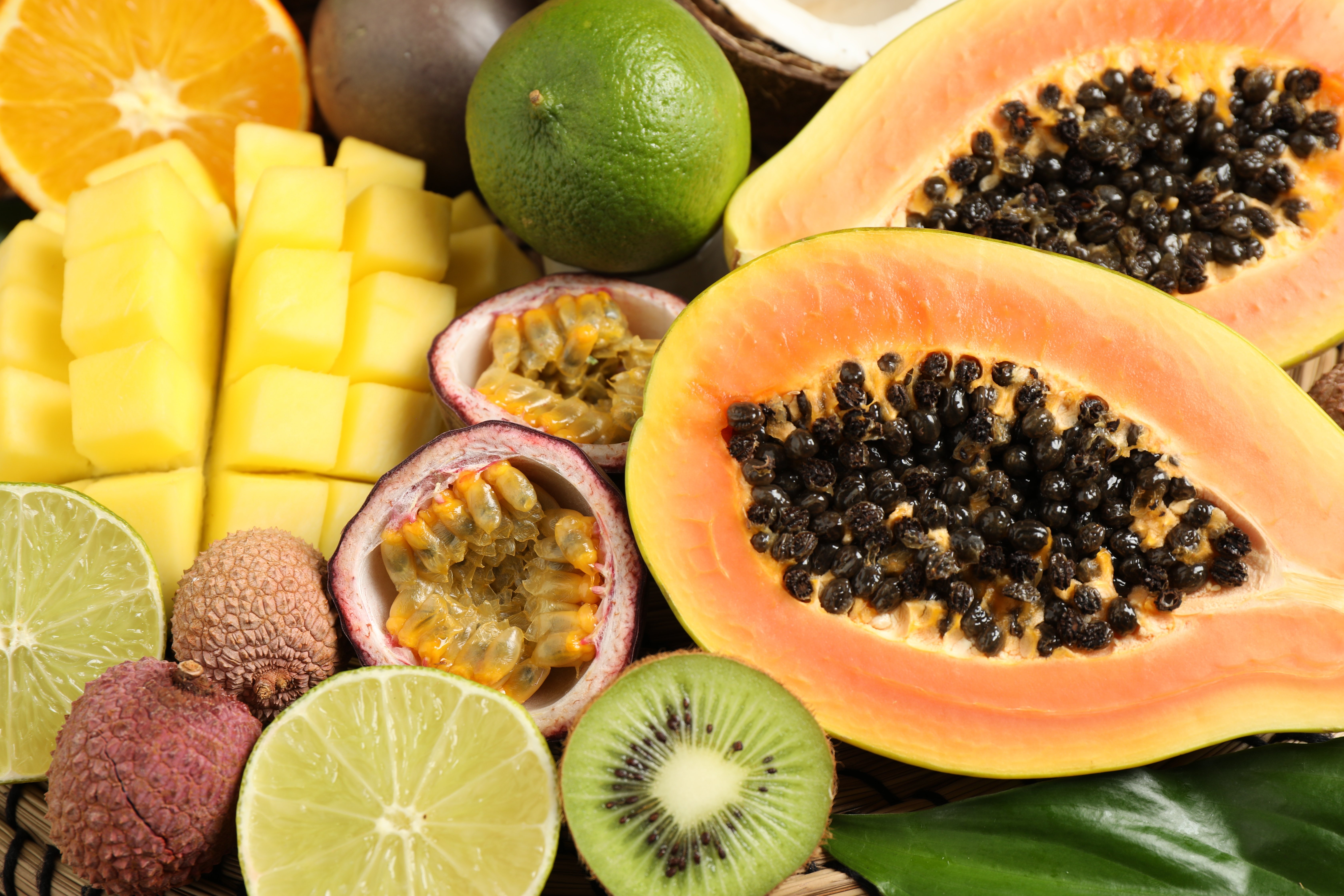
Costa Rica’s fruit calendar follows a rhythm shaped less by the calendar months most travelers know and more by two broad seasons: a dry season running roughly from December through April, and a rainy, or “green,” season from May through November. On the Caribbean coast, in Limón Province, this rainfall pattern, combined with warm year-round temperatures, supports a mix of fruits that peak at different points and others that grow steadily all year.
Fruits Available Year-Round
Some of the most common fruits in Costa Rica aren’t seasonal at all. Bananas and plantains, both major exports grown extensively near Limón, are harvested continuously throughout the year. Papaya follows the same pattern, growing steadily regardless of season and appearing on breakfast tables across the country. Because these staples don’t depend on a narrow harvest window, they remain a reliable presence in local markets and kitchens no matter when a visitor arrives.
Dry Season Highlights
As the dry season sets in, mangoes come into their prime, with the main harvest running from March through June. Street vendors commonly sell both ripe and green mango, the latter often eaten with salt and lime as a tart snack. Starfruit also has a notable window during this period, generally available from around September through April, recognizable by the star-shaped cross-section that forms when it’s sliced.
Rainy Season Abundance
The rainy season, while less appealing for beach days, is when several fruits reach their peak. Guava tends to run from late summer into the early winter months, used widely in jams, jellies, and juice. Citrus varieties native to the region also shift with the rains. The culinary team of experts from GigiO Restaurant Costa Rica explain that the Limón Criollo lime, a fruit deeply tied to Costa Rican cooking and especially ceviche, reaches peak juiciness between May and September, when rainfall is highest. Certain colorful native fruits, such as jocote, bloom later in the rainy season, typically appearing around August and September at local farmers’ markets.
Fruits Unique to the Caribbean Slope
Limón Province’s humid lowland climate supports fruits that don’t grow as easily elsewhere in the country. Guanábana, with its spiky green exterior and creamy interior, thrives in humid tropical zones like the Caribbean slope, where it’s commonly blended into juices and smoothies. Noni, though less familiar to visitors, grows abundantly around Puerto Viejo and has long been used by Indigenous communities, often mixed into smoothies to offset its strong flavor and smell. Cacao, another crop closely associated with the Caribbean lowlands, also grows in this same humid environment alongside these fruits.
Why Timing Affects What’s Available
Because Costa Rica’s Caribbean coast receives consistent rainfall and warmth throughout the year, fruit availability is less about strict seasonal boundaries and more about which crops are at their peak versus simply present. A traveler visiting during the dry season will find mangoes and starfruit at their best, while a rainy season visit lines up with lime, guava, and jocote reaching full ripeness. Understanding this distinction helps set realistic expectations, since nearly every fruit is available in some form throughout the year, but flavor, abundance, and price shift significantly depending on the season.
Planning a Visit Around Fresh Produce
For travelers who want to experience Costa Rican fruit at its best, timing a trip to align with a specific season can make a noticeable difference. Farmers markets, known locally as ferias, are typically the most reliable place to find fruit at peak ripeness, often at lower prices than supermarkets. Local restaurants along the coast often follow the same rhythm, since kitchens sourcing locally tend to shift menus around whatever fruit is freshest at the time.
Visitors interested in citrus may find more value in a rainy season trip, while those hoping to try fresh mango are better served visiting between March and June. Either way, the coast’s biodiversity means there’s rarely a bad time to try something new.
GigiO Restaurant Puerto Viejo
Ckinay@marketingtreasure.com
+1 786 6517997
Stanford’s Square
Puerto Viejo de Talamanca
Limón Province
70403
Costa Rica


