
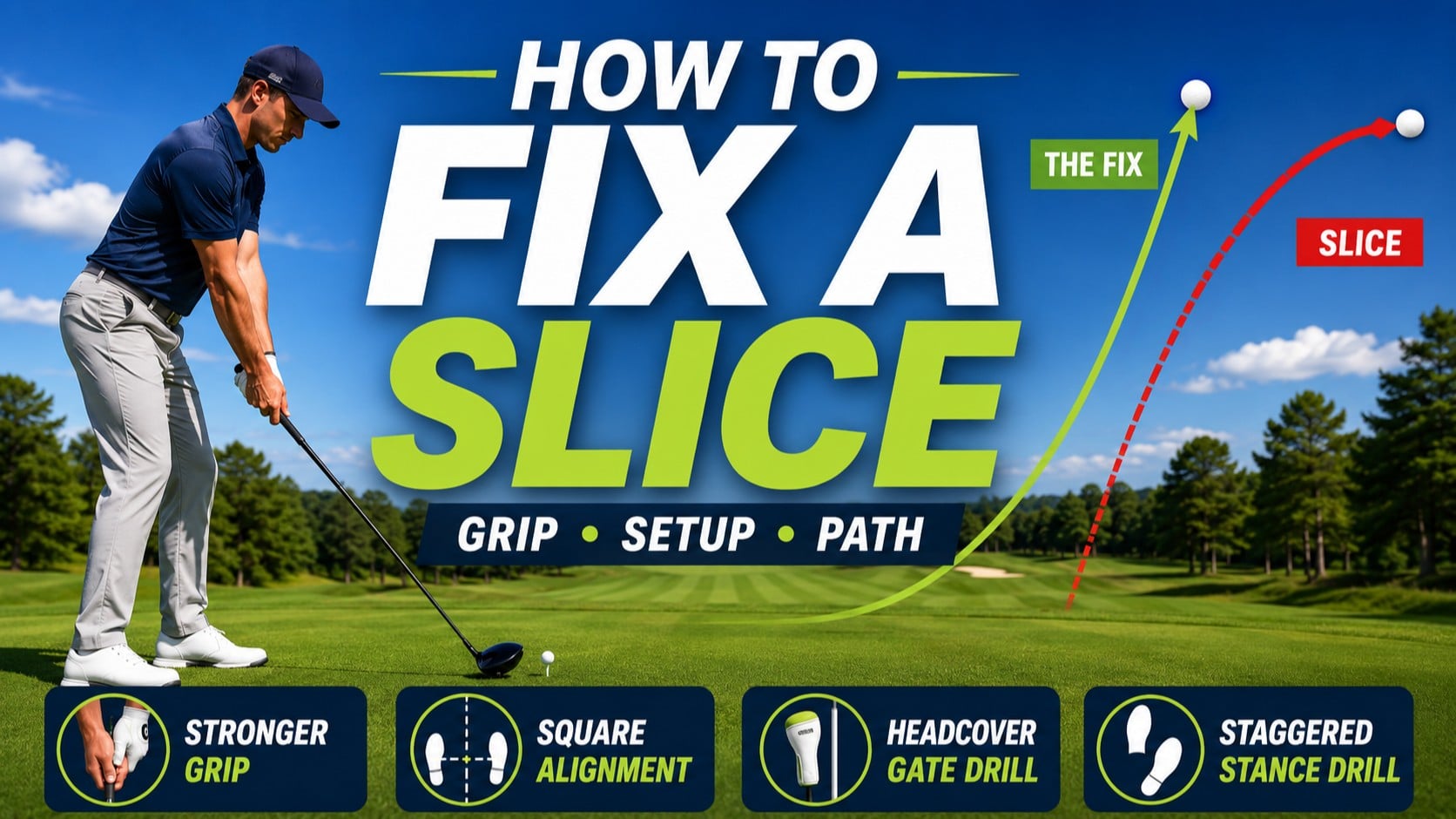
Your Slice Is Fixable Without a Swing Overhaul
- An open clubface at impact relative to the swing path is the #1 cause of a slice, and it can be corrected without rebuilding your entire swing.
- The right equipment can significantly reduce a slice, giving you straighter shots almost immediately. Draw-biased drivers like the Ping G430 SFT are engineered to provide up to 20 yards of right-to-left shot correction.
- Simple adjustments to grip strength, ball position, and alignment can dramatically reduce sidespin – no lessons required.
- There’s a key difference between what fixes a slice fast and what fixes it permanently – understanding that gap changes everything about how you approach the problem.
- Fairway Tips and News at golfersparidise.com covers specific driver comparisons and equipment reviews built around common problems like this one.
A slice doesn’t have to mean months of lessons and a rebuilt swing. For most recreational golfers, the root cause is surprisingly fixable – through equipment choices, minor setup tweaks, or both. Here’s a complete breakdown of what actually works.
Why the Slice Happens in the First Place
Before reaching for a fix, it helps to understand the actual physics. A slice is a ball-flight problem driven by one specific cause: sidespin. That sidespin is produced when the clubface is open relative to the swing path at the moment of impact. The ball launches left of the target (for right-handed golfers) and curves sharply right – sometimes ending up 30 or 40 yards offline.
Open Clubface at Impact: The Real Culprit
The clubface doesn’t have to be dramatically open to produce a slice. Even a few degrees of openness at impact is enough to generate the sidespin that sends the ball curving away. This is why slicers often feel like they’re swinging fine – they might be – but the face angle is betraying them at the one moment that matters most.
Setup Mistakes That Make It Worse
Several setup habits quietly amplify a slice without the golfer realizing it:
- Aiming left to compensate – This opens the swing path further and actually makes the slice worse over time.
- Ball positioned too far back in the stance – The clubface hasn’t had time to square up by the time it reaches the ball.
- Too much tension in the hands and forearms – Grip tension can hinder the natural release and rotation of the clubface, making it harder to square the face through impact.
The good news: none of these require a complete swing rebuild to fix.
How the Right Driver Reduces a Slice
This is where things get genuinely interesting. The right driver equipment can significantly reduce a slice without any swing adjustments. That’s not marketing language – it reflects real engineering built into modern anti-slice drivers: heel weighting, offset hosels, draw-biased face angles, and aerodynamic crowns all work together to square the face automatically at impact.
How Draw-Biased and Offset Drivers Work
Draw-biased drivers move the center of gravity toward the heel of the clubhead. This shifts the club’s rotation through the hitting zone, encouraging the face to close slightly before contact. Offset drivers take a different approach – they position the face slightly behind the hosel, giving the golfer a few extra milliseconds for the hands to rotate through and square the face naturally.
Models like the Callaway Big Bertha B21 and the Wilson Launch Pad are designed with anti-slice technologies, such as draw bias and offset features, making them popular choices for high-handicap golfers who want immediate shot-shape improvement without overhauling their mechanics.
SF1 Driver: Built-In Anti-Slice Technology
The SF1 Driver from Performance Golf stacks multiple correction technologies into a single clubhead. Its engineering includes an AeroSquare crown designed to reduce drag and promote faster face rotation, heel-and-back weighting to bias the flight toward a draw, anti-slice face curvature built into the face angle itself, and a counterbalanced shaft to improve tempo and release timing.
The practical effect is a driver that actively works against the open-face tendency – essentially automating part of the correction rather than requiring the golfer to consciously execute it.
Ping G430 SFT: Up to 20 Yards of Right-to-Left Correction
Ping’s engineering on the G430 SFT (Straight Flight Technology) is one of the more precisely documented examples of anti-slice design. The driver uses a 22-gram tungsten backweight positioned in the heel – a deliberate weighting choice that biases the clubhead to rotate closed through impact. According to Ping’s own specifications and independent reviews, this configuration can deliver up to 20 yards of right-to-left shot correction compared to a standard driver setup.
For a golfer losing 20-30 yards of fairway to a slice, that’s a meaningful improvement off the tee without changing a single part of the swing.
A detailed head-to-head comparison of these two drivers – the SF1 and the G430 SFT – is available at golfersparidise.com, which regularly covers equipment decisions like this one for golfers trying to make smarter buying choices.
Adjust Your Current Driver Before Buying New
Before investing in a new driver, it’s worth checking whether the current one is adjustable. Most modern drivers include a hosel adjustment system that allows loft and lie angle changes – and both settings directly influence ball flight for slicers.
How Loft and Lie Angle Reduce Sidespin’s Effect on Ball Flight
Increasing loft on an adjustable driver can reduce the effective sidespin ratio on the ball – higher loft produces more backspin relative to sidespin, which straightens the flight. Separately, adjusting the hosel to a more upright lie angle, often done alongside loft changes, can promote a slightly more closed face angle at address and shift the starting line toward the target.
Neither adjustment changes how the swing feels. They simply change what the club does with the swing that already exists.
Minor Mechanical Fixes With Major Impact
Equipment handles a significant portion of the correction – but pairing it with a couple of small mechanical adjustments accelerates the improvement considerably. The key word is small. These are setup changes, not swing rebuilds.
Strengthen Your Grip First
Among all the minor mechanical fixes available to slicers, grip adjustment is consistently cited by teaching professionals as the fastest and highest-leverage change. A weak grip – one where the hands are rotated too far toward the target – makes it structurally harder to square the face through impact.
Strengthening the grip means rotating both hands slightly away from the target (clockwise for right-handed golfers) so that two to three knuckles of the left hand are visible at address. This simple rotation changes the geometry of how the face arrives at the ball – without altering swing path, tempo, or posture.
Ball Position and Alignment Corrections
Two setup habits are almost universal among chronic slicers:
- Ball position too far back – For a driver, the ball should be positioned just inside the lead heel. Moving it forward gives the clubface time to rotate to square before impact.
- Misaligned body and feet – Many slicers aim their feet left thinking it compensates, when it actually reinforces the outside-in swing path. Square the feet, hips, and shoulders to the target line and commit to it.
Together, a strengthened grip, corrected ball position, and proper alignment can eliminate a significant portion of a slice – sometimes completely, depending on its severity.
Training Aids That Reinforce the Fix
Equipment and setup corrections work well on their own, but training aids help lock the changes into muscle memory faster. A few worth considering:
- Alignment sticks – Inexpensive and highly effective for fixing aim and ball position habits at the range. Place one on the ground along the target line and one across the toes to train proper setup every session.
- Grip trainers (e.g., Perfect Grip Pro) – These devices physically position the hands in the correct neutral-to-strong grip orientation, building the habit without conscious thought during practice.
- Wrist sensors (e.g., HackMotion) – These strap-on sensors track wrist angle and face rotation data in real time, giving immediate feedback on whether the clubface is opening too early in the swing.
Training aids are most effective when used alongside an equipment fix. The driver corrects the shot shape immediately; the training aid builds the mechanics to sustain it.
Equipment Helps Immediately – But One Thing Lasts Longer
The honest takeaway: anti-slice equipment works – and for many golfers, it works well enough to stop being a problem on the course. Tools like the Ping G430 SFT and SF1 Driver are engineered specifically to deliver meaningful correction off the tee.
That said, equipment compensates for a swing pattern without changing it. If the underlying outside-to-inside swing path is severe, equipment alone will eventually hit its limits. Golfers who eliminate a slice for good typically combine a draw-biased driver with the grip and alignment corrections outlined above – and then, when ready, address the swing path through targeted drills or a session with a teaching professional.
Start with equipment and the minor setup fixes. Get straighter tee shots now. Then use the confidence from better ball flight to work on the root cause at whatever pace makes sense.
For more equipment reviews, driver comparisons, and practical tips built around common course problems, visit Fairway Tips and News – a resource dedicated to helping golfers improve their game with straightforward, actionable guidance.
Fairway Tips and News
8767 3rd Avenue
Pleasant Prairie
WI
53158
United States


