
Originally Posted On: https://anzzi.com/blogs/news/how-to-find-a-walk-in-tub-with-hydrotherapy-jets-that-actually-ease-arthritis-pain
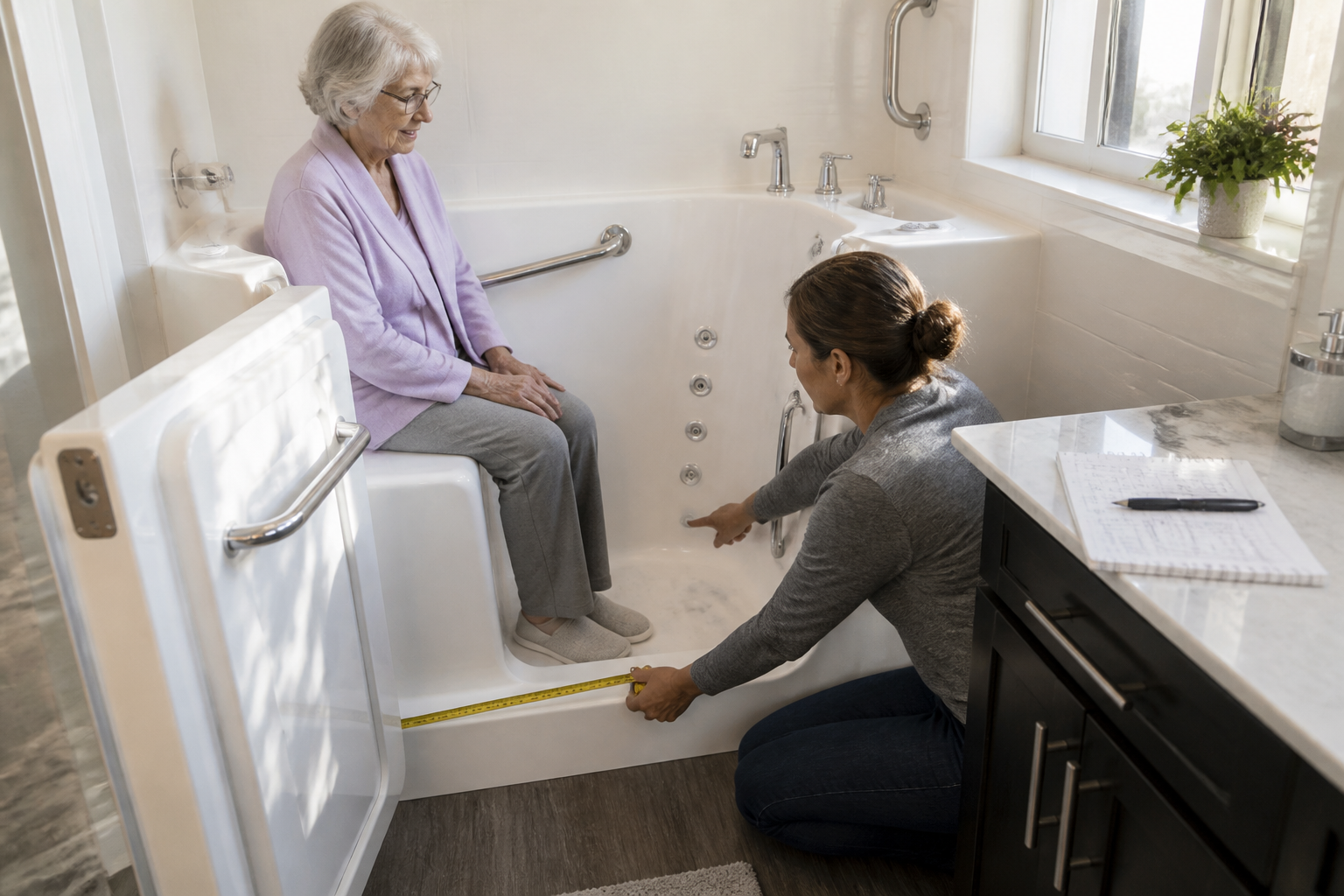
What You'll Need
-
Bathroom measurements: doorway width, floor space, and step-over height so you know what actually fits.
-
A tape measure and notepad — or a phone camera to snap photos of the plumbing hookups and drain location.
-
Doctor's notes or a physical therapy recommendation naming the joints affected (knees, hips, lower back) — this drives jet placement decisions.
-
A realistic budget range, including installation, not just the tub itself.
-
Mobility details: does your parent use a cane, walker, or wheelchair part-time? This affects door swing and seat height.
-
Info on your home's water heater capacity — jetted tubs hold more water and drain faster than a standard tub.
-
A list of must-have safety features: grab bars, anti-slip flooring, low threshold entry.
-
Insurance and Medicare paperwork on hand — you'll want it nearby to check what, if anything, applies to your situation.
-
About 2-4 weeks for research and comparison shopping, plus separate time for installation once you've bought.
-
Basic comfort with a phone or online chat to ask manufacturers direct questions about jet configuration before buying.
Her hands ache so bad some mornings she can't twist a doorknob, let alone climb over a tub wall. If that sounds like your mom or dad, you already know a regular bathtub isn't just inconvenient — it's become a daily battle with pain and fall risk. A good walk in tub with real hydrotherapy jets can change that, but here's the catch: not every jetted tub on the market actually delivers therapeutic relief for arthritis. Some are little more than a bathtub with bubbles for show.
Finding the right one takes more digging than scrolling through a Home Depot listing or comparing prices for walk-in tubs at face value. Jet placement matters. Water temperature matters. Whether the jets are air-driven or water-driven changes how the massage feels on swollen knuckles and stiff knees. And honestly? Most families don't know what questions to ask until after they've already spent the money.
This guide walks you through exactly how to find a jetted walk-in tub that targets arthritis pain instead of just looking nice in a showroom photo. You'll learn how to read the specs that actually matter, what separates a Kohler walk-in tub from an American Standard model, and how to avoid paying for features your parent will never use. By the end, you'll know precisely what to look for — and what to skip.
What You'll Achieve and What You Need Before You Start
Picture this: your dad's hands are so stiff by 7 a.m. that he can't twist the cap off his coffee creamer, let alone grip a tub rail. That's the daily reality for a lot of families searching for a walk in tub — and it's why jets matter more than the marketing photos suggest.
The Goal: Real Pain Relief, Not Just a Fancy Tub
Here's what most people miss: not every jet system does the same job. Air jets produce a lighter, bubbling massage good for circulation. Water jets push deeper, targeted pressure that arthritic joints actually respond to. You want the second kind, positioned near the lower back, hips, and knees — not just scattered around for show.
What to Gather First — Measurements, Doctor Notes, and a Budget Range
Before calling anyone, measure the bathroom doorway and the alcove space. Grab a note from the doctor naming the specific joints affected — that detail helps you pick jet placement instead of guessing. Set a rough budget range, not a fixed number. And it's worth knowing the industry's shifting fast; anzzi expands walk-in tub coordination across bathroom fixtures, so matching finishes across the bathroom is easier than it used to be.
Step 1: Understand How Hydrotherapy Jets Actually Work on Arthritic Joints
Not all jets do the same job, — that's the first thing to get straight. A good walkin bathtub uses moving water or air to boost circulation around swollen joints, which is what actually eases stiffness — not just the warm water itself.
Water Jets vs. Air Jets — Why the Difference Matters for Pain
Water jets push out a firmer, more direct stream. They're better for deep muscle soreness in the hips or lower back. Air jets release thousands of tiny bubbles across the whole tub floor — gentler, and often a better fit for someone with fragile skin or swelling in the knees. Ask which system a model uses before you buy. Some tubs, like walk-in tub model ba-lmdfv002wh, combine both so a parent can switch depending on how the joints feel that day.
Where V-Shaped Back Jets and Foot Jets Target Sore Areas
Placement matters as much as jet type. V-shaped back jets hit both sides of the spine at once — helpful for lower back arthritis. Foot jets sit low and target ankles and feet, an area seniors mention constantly but rarely get relief for elsewhere.
Step 2: Measure Your Bathroom and Your Parent's Mobility Needs
Have you actually pulled out a tape measure yet? Most families skip this step and fall in love with a model that won't fit through the bathroom door. Grab the numbers before you fall for any walk-in bathtub online — dimensions vary more than people expect, and a return on a 400-pound tub is nobody's idea of fun.
Doorway Width, Step-Over Height, and Turning Space
Standard doorways run 28 to 32 inches wide. If your parent uses a walker, add a few inches for clearance. Step-over height matters even more — a low threshold (usually 3 to 5 inches) is the whole point of going this route instead of a standard tub. Also check the floor space in front of the tub; a wheelchair or walker needs roughly 30×48 inches to turn safely.
Right-Drain vs. Left-Drain Configurations
This one's easy to overlook. Drain placement determines which side the door and controls sit on, and that affects how your parent steps in relative to grab bars and the toilet. Stand in the bathroom, picture the entry path, and pick the side that keeps their stronger leg leading the way.
Step 3: Compare Walk-In Tub Types and Narrow Down a Shortlist
Here's a number that surprises most families: nearly 80% of walk-in tub buyers end up choosing a model with a shower combo instead of a soaking-only unit. That single stat should shape your whole search.
Soaking Tubs vs. Walk-In Tub With Shower Combos
A basic soaking tub does one thing well — it lets someone sit and soak once the door seals and it fills. But a walk-in tub with shower gives a parent the option to rinse off standing on non-slip flooring before ever lowering into the water. That matters on days when a full soak isn't practical. If a hinged bath tub door with a leak-proof seal is on your checklist, take a look at the bath tub door options separately, since fit and seal quality vary a lot between models.
Fully Loaded Models With Both Air and Water Jets
For arthritis relief specifically, a fully loaded tub — one with both air jets and water jets, plus an inline heater — outperforms single-jet models. Air jets give a gentler, bubbling massage across the whole back and legs. Water jets target sore joints directly. Together, with heat keeping the water from cooling mid-soak, that combination is what actually eases pain, not just one or the other.
Step 4: Check Safety Features Before You Even Look at Jets
Here's the myth worth busting: jets don't matter if your mom can't get into the tub without falling first. A lot of buyers get so excited about hydrotherapy that they skip past the basics — that's backward. Safety comes first, jets come second. Always.
Low-Threshold Entry, Grab Bars, and Anti-Slip Flooring
Look for a step-in height around 3 to 5 inches, not the 14-inch wall of a standard tub. Grab bars should be built into the frame, not bolted on as an afterthought (that's a red flag). Floor and seat surfaces need real anti-slip texture, not a smooth finish that turns dangerous the second it's wet. If the model includes a shower tub door, check that it seals tight without pinching fingers or requiring a hard shove to close.
Quick-Fill and Fast-Drain Systems That Reduce Wait Time in Cold Water
Nobody wants to sit shivering for ten minutes waiting for water to reach the jets' operating depth. A quick-fill faucet paired with a powered fast-drain system keeps someone from sitting in cooling water any longer than necessary. That's not a luxury add-on. It's what makes the whole soak actually work.
Step 5: Test and Verify Jet Placement, Heat Retention, and Comfort Features
Picture Dad sitting down in his new tub, closing the door, and turning on the jets — only to find they hit his shoulders instead of his lower back, where his arthritis actually lives. This happens more than you'd think. Before you buy, ask for a jet diagram or, better yet, a showroom test. Placement matters more than jet count.
Inline Water Heaters for Longer Soaks
Standard tubs cool fast, — cold water tightens joints instead of loosening them. A built-in inline heater keeps the water at a steady, therapeutic temperature for a 20 to 30 minute soak — long enough for jets to actually do their job. If a model doesn't have one, ask directly. It's a small feature that changes the entire experience.
Chromatherapy and Aromatherapy — Nice Extras, Not Dealbreakers
Mood lighting and scent systems feel nice, but they're not why you're buying this tub. Don't let a salesperson steer you toward these upgrades while glossing over heat retention or jet placement. And while you're finalizing the bathroom, don't forget bath tub shower doors that seal properly and won't fog up during a long soak.
Step 6: Understand Real Costs and What Medicare Will (and Won't) Cover
Nobody hands you a straight answer on price, so let's fix that. A jetted walk-in tub costs more than a standard soaking model because you're paying for the door seal, the pump, and the plumbing that drives those jets.
Typical Price Ranges for Jetted Walk-In Tubs
Budget models with basic air jets often start lower, while dual hydrotherapy systems — combining air and water jets — run higher once you add installation, an inline water heater, and a fast-drain system. A unit like the anzzi walk-in tub shows how features like V-shaped back jets and quick-fill fillers factor into the total price, separate from labor costs for a plumber to handle drain lines and water hookups.
Medicaid, Medicare, and HSA/FSA Reality Check
Here's the part people don't want to hear: original Medicare doesn't cover walk-in tubs, jetted or not, because it's classified as a home modification rather than durable medical equipment. Some Medicare Advantage plans offer partial reimbursement — call your provider directly and ask. Medicaid waivers vary heavily by state. Your best bet is often an HSA or FSA account, especially with a doctor's letter documenting arthritis or a diagnosed mobility condition.
Common Mistakes to Avoid When Choosing a Jetted Walk-In Tub
Ever notice how a tub can look stunning in a showroom — still do nothing for your knees? That's the trap a lot of buyers fall into — they shop with their eyes instead of their joints.
Buying Based on Looks Instead of Joint-Specific Jet Placement
A glossy finish and a nice frame don't tell you where the jets actually hit. Hips need lower, wider jet rows. Shoulders and lower back need higher placement, sometimes angled. If you or your parent deal with knee or hip arthritis, ask for a jet diagram before you buy — not just marketing photos. A freestanding walk-in tub with adjustable jet zones gives you room to target pain as it moves, which arthritis tends to do.
Skipping the Installation and Plumbing Check
Here's what most people miss: a tub with great jets is useless if your water heater can't refill it fast enough for a second soak. Older homes often need updated plumbing lines or a larger water heater to keep water hot through a full hydrotherapy cycle. Get a plumber to check line pressure and heater capacity first. Skip this step, and you'll end up with lukewarm water halfway through — right when the jets should be doing their best work.
Step 7: Confirm You Made the Right Choice — Final Checklist Before You Buy
Here's a number that surprises most families: nearly 8 out of 10 tub-related injuries happen during the first few weeks after installation, not years later. That's usually a fit problem, not a product problem. Before you sign off on any walk in tub, walk through the door swing, seat height, and jet placement with the actual person who'll use it daily.
How to Verify Fit, Function, and Comfort After Delivery
Once it's delivered, don't just admire it — test it. Sit down, reach the controls, check the water heater response time, and run the jets for a full cycle. Arthritis relief depends on jet position hitting shoulders, hips, or knees correctly, not just having jets at all.
Review the walk-in bathtub features for accessibility against what actually arrived — grab bars, seat height, and threshold should match the spec sheet exactly.
Next Steps for Scheduling Installation and Setting Up a Bathing Routine
Book installation with a licensed plumber familiar with low-threshold units. Afterward, set a consistent bathing schedule — morning soaks tend to ease stiffness better than evening ones for most arthritis sufferers.
How-To FAQ
What are the drawbacks of a walk-in tub?
The biggest drawback is the wait — you sit in an empty tub while it fills, then sit through the drain cycle before you can safely stand up, so cold exposure is a real concern without a quick-fill system and inline heater. Installation also usually means replacing your existing tub, which can mean a few days without a shower unless you go with a combo unit. And they're not cheap. Budget accordingly, and ask about temporary bathing plans during install.
How much does a walk-in tub actually cost?
Most jetted walk-in tubs run somewhere between $3,000 and $10,000 for the unit alone, with installation adding more depending on plumbing and floor work. A basic soaking model with no jets sits at the low end. A fully loaded tub with both air and water jets, an inline heater, and a shower combo sits at the high end. Get at least two quotes that separate the tub cost from labor so you know what you're comparing.
Does Medicare pay for a walk-in tub?
No, original Medicare does not cover walk-in tubs — it's classified as a home modification, not durable medical equipment. Some Medicare Advantage plans offer limited allowances for home safety upgrades, so it's worth calling your plan directly — asking. Medicaid waivers in some states cover part of the cost for qualifying seniors. An HSA or FSA can sometimes reimburse the purchase if a doctor documents medical necessity — get that letter before you buy, not after.
What is an alternative to a walk-in tub?
A barrier-free (roll-in) shower with a built-in seat is the most common alternative — it's often cheaper and faster to install than a jetted tub. Portable bath lifts and transfer benches can also buy time before a full renovation. Neither gives you hydrotherapy jets, though, so if arthritis pain relief is the goal, a walk-in tub with water jets is hard to replace.
How long does it take to install a jetted walk-in tub?
Most installations take one to three days once the tub arrives, assuming no major plumbing or wall changes are needed. Older bathrooms with outdated plumbing can add a day or two. Ask your installer upfront whether they're doing a straight swap or rerouting pipes — that answer tells you how much your timeline might slip.
Is it safe for someone with limited mobility to use the jets alone?
Yes, as long as the tub has a low-threshold door, secure grab bars, and a seat at the right height for a safe transfer. But nobody with balance issues or a recent fall history should bathe completely unsupervised the first several times. Have a caregiver nearby until everyone's comfortable with the door seal, the controls, and how long the fill and drain cycles actually take.
Finding the right walk in tub for a parent with arthritis comes down to matching jet placement to actual pain points, not just picking whatever looks nicest in a brochure. A tub with water jets aimed at the lower back does nothing for someone whose knees and hands hurt the most. Measure the bathroom, measure the doorway, and measure your parent's patience for a long approval process — all three matter more than most families realize going in.
Don't skip the boring parts either. Low thresholds, quick-fill valves, and anti-slip flooring prevent the exact falls this whole search is meant to avoid. And be honest about the budget conversation early, because Medicare coverage is limited and surprises late in the process only add stress to an already emotional decision.
So here's the next move: pull together your parents' doctor notes, take real measurements this weekend, and call a couple of manufacturers directly to ask specific questions about jet configuration before you sign anything. That one phone call could save months of regret.


