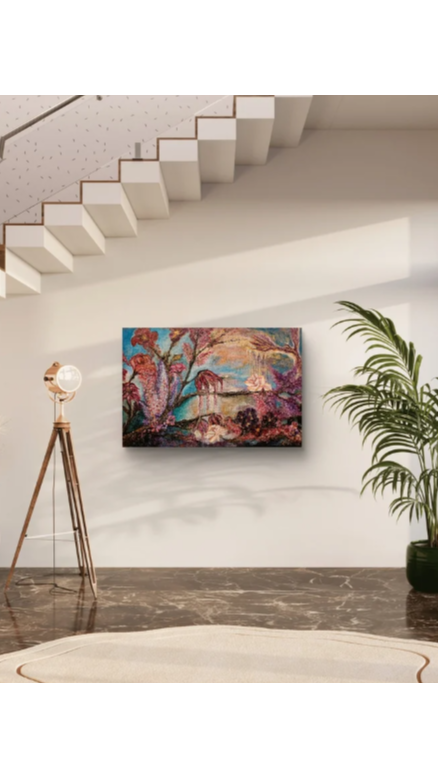
In 2026, homeowners are rethinking how their spaces feel—not just how they look. According to Houzz, more than 60% of homeowners prioritize personality-driven design choices over purely functional upgrades, signaling a clear shift toward expressive interiors. Walls are no longer just background elements; they’re becoming focal points that define the mood and identity of a room.
Think of a living space like a conversation. Furniture sets the structure, lighting creates tone, but wall art delivers the message. Without it, even the most well-designed room can feel unfinished or impersonal. This is why statement art—bold, meaningful, and often emotionally driven—is emerging as one of the most influential interior décor trends of the year.
The Rise of Statement Wall Art in Modern Homes
Statement art is not just about size or color. It’s about impact. Whether it’s a large-scale canvas, a textured piece, or an emotionally evocative print, the goal is to create a visual anchor that draws attention and invites interpretation. Unlike traditional décor approaches that relied on symmetry and subtlety, today’s interiors embrace contrast, storytelling, and individuality.
Why Minimalism Made Room for Expression
Minimalism dominated interior design for years, emphasizing clean lines, neutral palettes, and clutter-free spaces. While that aesthetic still influences modern homes, it has evolved. Today’s version of minimalism leaves space for expression rather than removing it entirely.
Statement art fits perfectly into this updated philosophy. A room can remain simple and uncluttered while still featuring one powerful visual element that defines its character. Instead of filling every wall, homeowners are choosing one or two pieces that resonate deeply, making the space feel curated rather than decorated.
Emotional Connection Is Driving Design Choices
One of the most significant shifts behind this trend is the growing emphasis on emotional connection. People are no longer satisfied with generic décor that looks good but feels empty. They want pieces that tell a story, evoke a memory, or reflect their identity.
This is where emotional art comes into play. Art that conveys movement, mood, or narrative tends to hold attention longer and create a more immersive environment. According to the National Endowment for the Arts, engagement with visual arts is increasingly linked to personal well-being, reinforcing the idea that what we place on our walls can influence how we feel in a space.
The Influence of Multimedia and Sensory Design
Another factor shaping interior décor trends in 2026 is the growing interest in sensory experiences. While traditional art focuses on visual impact, newer approaches are beginning to explore how art can engage multiple senses.
For example, some Canadian artists and studios—such as High Style Fine Art—are experimenting with ways to deepen the viewer’s connection to their work, including pairing visual pieces with complementary elements like music or storytelling. While still an emerging concept, it reflects a broader desire for art that feels dynamic rather than static.
This shift aligns with the rise of immersive design across industries, from retail spaces to hospitality. At home, it translates into décor choices that create atmosphere, not just aesthetics.
Statement: Art as a Reflection of Identity
In many ways, the popularity of statement wall art comes down to identity. Homes are increasingly seen as extensions of personal values and experiences. Just as fashion allows people to express themselves outwardly, interior design offers a more private but equally powerful form of self-expression.
A single piece of art can communicate taste, mood, and perspective in a way that furniture or color schemes often cannot. Whether it’s abstract, figurative, or textural, statement art gives homeowners a way to make their space uniquely theirs.
Looking Ahead: Where This Trend Is Going
As 2026 continues, statement art is expected to evolve further, blending traditional techniques with modern concepts like multimedia and personalization. The focus will likely remain on authenticity—pieces that feel intentional, meaningful, and deeply connected to the people who live with them.
For homeowners, this means moving away from safe, generic choices and toward art that sparks something—whether it’s curiosity, calm, or inspiration. Walls are no longer just surfaces to decorate; they’re opportunities to create an experience.
High Style Fine Art & Design
tamijo.highstyle@gmail.com
+1 403 505 2217
70 Ranchers Close
Lacombe
Alberta
T4L 0K1
Canada