

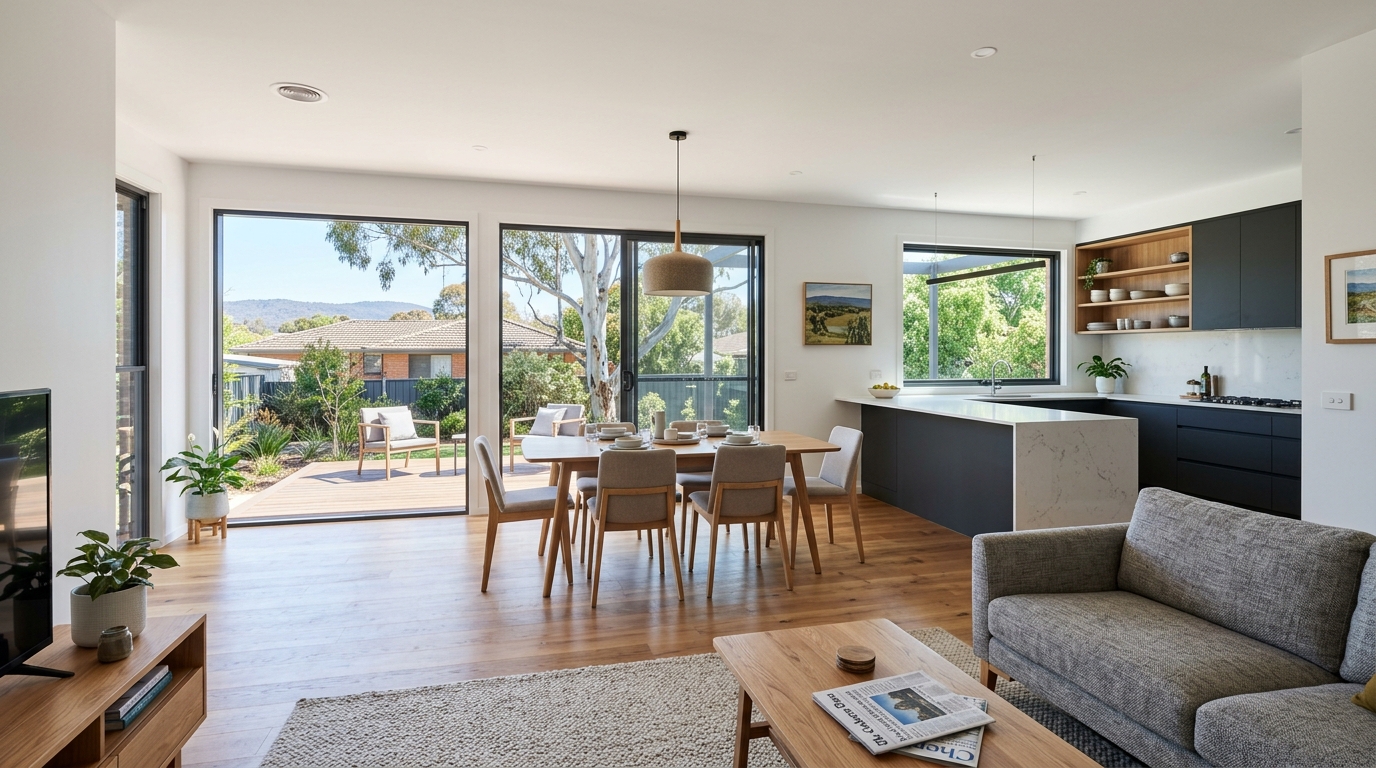
Key Takeaways
- A whole-house renovation in Canberra typically runs from $280,000 to $850,000, with projects often taking 26-52 weeks to complete
- Kitchen renovations generally range from $20,000 to $45,000, while bathroom renovations sit between $25,000 and $65,000 and take roughly 3-8 weeks
- Moving plumbing lines, re-waterproofing wet areas and allowing for new appliances are hidden costs that can shift a renovation budget significantly
- Choosing a licensed renovator with the right certifications can help avoid costly compliance issues down the track
- Building a budget room by room, rather than guessing at a single whole-house figure, is the most reliable way to plan a full renovation – the breakdown below shows exactly how
Planning a full home renovation in Canberra means juggling a lot of moving parts, and nowhere is that more obvious than the budget. Rather than guessing at one big number, the smartest approach breaks the project down room by room, since every space comes with its own scope, plumbing demands and finish choices. This guide walks through what each part of the house tends to cost, where the hidden expenses sit, and how to build a realistic budget from the ground up.
Whole-House Renovations: $280,000-$850,000
A full home renovation across Canberra typically falls between $280,000 and $850,000, with projects usually taking 26 to 52 weeks from start to finish. That is a wide range, and for good reason: a modest update to an existing floor plan sits at one end, while a full strip-out with structural changes, new services and premium finishes sits at the other.
The size of the gap between those two figures is exactly why a single whole-house number is not very useful on its own. Custom home renovations in Canberra often combine several room-level projects under one roof, each with its own scope and cost drivers, so understanding those individual pieces is the real key to an accurate budget. Treating the whole-house figure as a starting point, rather than a fixed target, makes the planning process far less stressful.
Budgeting room by room also makes it easier to set priorities. Some homeowners want every space renovated to the same high standard, while others are happy to spend more on a kitchen and keep a laundry simple. Breaking the project into parts allows that kind of flexibility without losing sight of the overall figure.
Why Budgets Vary Room By Room
Three main factors explain why one kitchen might cost $25,000 and another $45,000, or why one bathroom comes in under $30,000 while a similar-sized one tops $60,000. Understanding these factors early makes it much easier to set realistic expectations before a single quote comes in.
Scope and finish level of each space
A quick refresh, such as repainting cabinetry or replacing tapware, costs far less than a full strip-out and rebuild. Finish level matters just as much as scope: stone benchtops, feature tiles and custom joinery push costs up quickly compared with standard, off-the-shelf materials. Two rooms of the same size can land at very different price points purely because of the quality of fixtures and finishes chosen.
Plumbing and structural work involved
Moving a sink, shower or toilet away from its existing position adds labour, materials and often approval requirements that a straightforward like-for-like replacement avoids. Structural changes, such as removing a wall to open up a kitchen or extending a bathroom’s footprint, bring additional costs for framing, waterproofing and sometimes engineering input. The more a renovation shifts the existing layout, the more these costs add up.
Upgrades needed to existing services
Older Canberra homes often have plumbing, electrical and drainage systems that were never designed for modern appliances or larger bathrooms. Bringing these services up to current standards, before the visible renovation work even begins, can add a meaningful chunk to a budget that homeowners do not always anticipate. A pre-renovation inspection is one of the best ways to flag these upgrades early, rather than encountering them mid-project.
Kitchen Budgets: $28,000-$95,000
In Canberra, a kitchen renovation typically costs between $20,000 and $45,000. A few choices tend to have an outsized effect on where a kitchen budget lands within that range:
- Relocating the sink or cooktop, which affects plumbing and gas lines
- Choosing stone over laminate bench tops
- Opting for custom cabinetry instead of standard modular units
- Adding an island bench, which often requires new plumbing and electrical points
A larger strip-out involving new cabinetry, benchtops, splashbacks, appliances and plumbing or electrical relocation sits toward the top of that range, while a lighter cosmetic update that keeps the existing layout and swaps finishes and appliances lands closer to the lower end.
Bathroom Budgets: $25,000-$65,000
Bathroom renovations across Canberra typically cost between $25,000 and $65,000, with most projects taking 3 to 8 weeks to complete. As with kitchens, the scope of work drives the price far more than the size of the room. A quick refresh, such as re-grouting tiles and swapping out tapware, can be done for $3,000 to $8,000. Cosmetic work that retains the existing plumbing and wall layout generally sits between $10,000 and $22,000.
Mid-level bathroom renovations, where some fixtures move but the room’s footprint stays similar, run from $22,000 to $45,000. A full strip-out, including new waterproofing, tiling, plumbing and fixtures throughout, typically costs $30,000 to $60,000, landing near the top of the $25,000-$65,000 range for larger or more elaborate designs. Waterproofing and tiling labour are consistently cited as two of the biggest cost drivers in a bathroom renovation, since both are essential for a compliant, long-lasting result.
Laundry and Living Area Costs
Laundries and living areas rarely get the same attention as kitchens and bathrooms in renovation planning, yet they still need a realistic allowance in any whole-home budget.
Laundry renovations from $6,000
Laundry renovations start from around $6,000 for a light cosmetic refresh, covering things like new cabinetry fronts, a replacement tub and updated tapware. Mid-range laundry work, which might include new benchtops, storage and flooring, tends to sit higher, while a custom rebuild involving plumbing changes pushes costs up further still. Whether existing plumbing can stay in place is one of the clearest dividing lines between a budget-friendly laundry update and a more expensive overhaul.
Living area refreshes from $7,344
Living area updates start from around $7,344 for a standard-sized room, covering cosmetic changes like flooring, paint, lighting and fixed joinery. Because living areas generally involve little or no plumbing, costs here are driven mainly by finish choices and the amount of built-in cabinetry or feature work included. A living area refresh is often one of the more predictable parts of a whole-home budget, since there are fewer hidden structural or service surprises compared with wet areas.
Hidden Costs That Shift a Budget
Even a carefully planned renovation budget can be thrown off by a handful of costs that are easy to overlook at the quoting stage. Knowing about these in advance means fewer surprises once work is underway.
Moving plumbing lines
Relocating plumbing is one of the most common budget blowouts in both kitchens and bathrooms. Shifting pipework to accommodate a new layout can add around $4,000 to a bathroom renovation and around $3,500 to a kitchen renovation, on top of the base renovation cost. These figures reflect the labour and materials involved in extending or rerouting existing lines, rather than simply reconnecting fixtures in their original spot.
Re-waterproofing wet areas
Any renovation that disturbs existing tiling or flooring in a bathroom or laundry generally requires re-waterproofing, a non-negotiable step for compliance and long-term durability. This typically adds $2,500 or more to a bathroom renovation budget. Skipping or skimping on waterproofing is a false economy, since water damage repairs down the track usually cost far more than doing the job properly the first time.
New appliance allowances
A kitchen renovation budget should also set aside an allowance for new appliances, which typically adds around $6,000 on top of cabinetry, bench top and installation costs. This figure covers essentials like a cooktop, oven, range hood and dishwasher, though premium brands or additional appliances will push this allowance higher. Building this into the budget from the outset avoids the common trap of running out of funds just as the fit-out nears completion.
Choosing a Licensed Canberra Renovator
A renovation budget is only as reliable as the tradespeople delivering it, which makes licensing and experience genuinely important factors in the planning process. Prestige Plumbing and Building holds a C-class building licence along with certifications in tiling and plumbing, and the business has more than 17 years of experience renovating homes across Canberra, including collaborations with architects and investors.
When comparing renovators, a few questions help separate a reliable operator from a risky one:
- Does the business hold the correct building licence for the scope of work involved?
- Are tiling and plumbing handled by certified tradespeople, rather than subcontracted without oversight?
- Does the renovator manage the project from start to finish, or hand off coordination between trades to the homeowner?
- What steps are taken to keep the work area clean and minimise disruption to daily life during the renovation?
A renovator that manages a project end to end, rather than leaving homeowners to coordinate multiple trades, tends to keep both budgets and timelines more predictable. This kind of oversight matters most in rooms involving plumbing and waterproofing, where mistakes are expensive to fix after tiling or cabinetry has gone in.
Build Your Budget Room By Room
Putting together a full renovation budget becomes far more manageable once it is broken into kitchen, bathroom, laundry and living area components, each weighed against its own scope, plumbing needs and finish level. Starting with the ranges above, then adjusting for structural changes, service upgrades and any layout shifts specific to a home, gives a far more accurate figure than relying on a single whole-house estimate. As a practical next step, working through a custom home renovation plan room by room helps turn these figures into a budget that holds up once the work begins.
Prestige Plumbing and Building
+61 422 181 663
55 Stretton Cres
Latham
ACT
2615
Australia