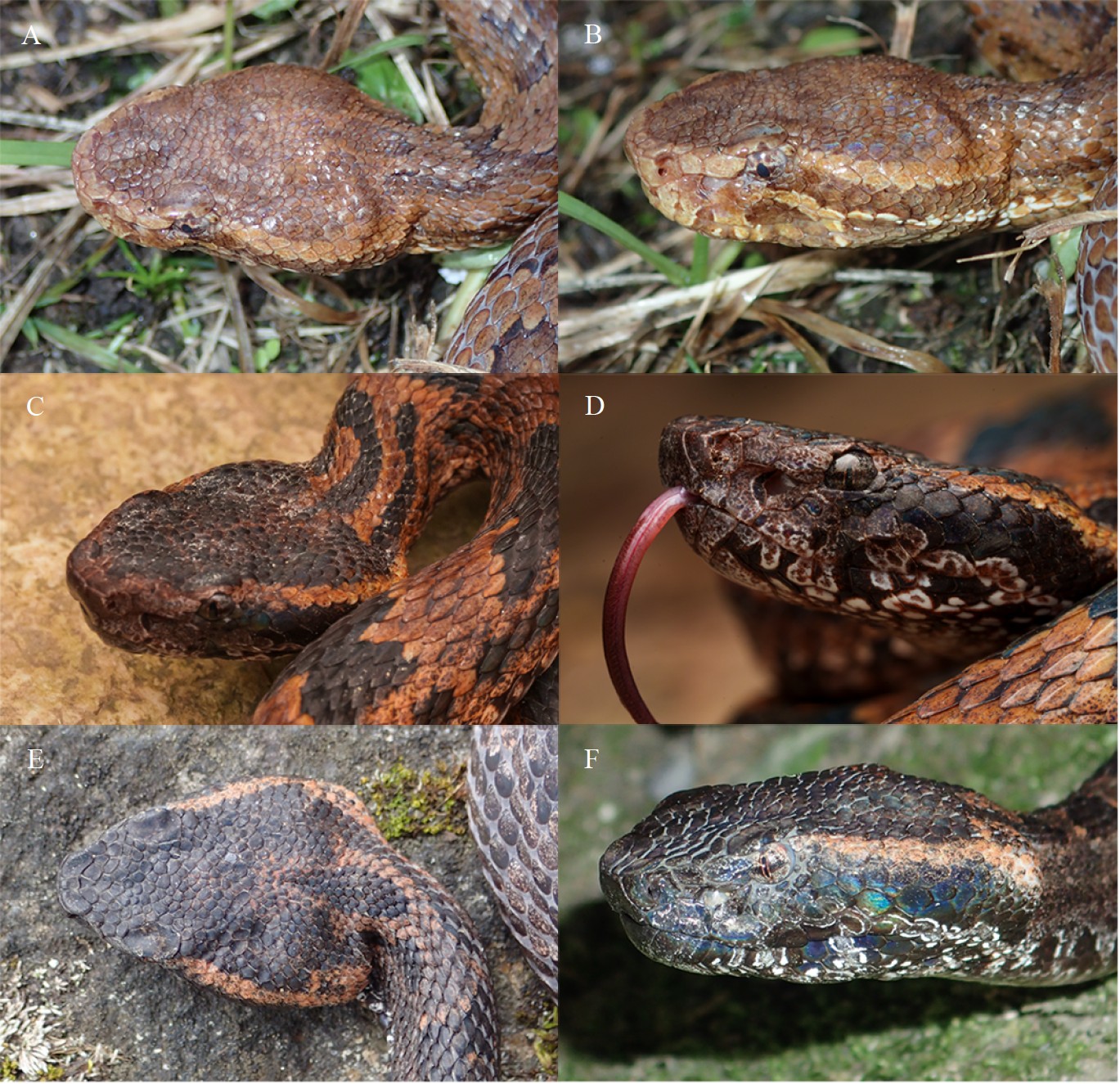
GA, UNITED STATES, July 8, 2026 /EINPresswire.com/ — The eastern Himalayas continue to reveal their biological secrets. Scientists have discovered a previously unknown species of venomous pit viper from the mountainous forests of Medog County in Xizang Autonomous Region, China. The new snake, named Ovophis medogensis, was identified through a combination of DNA analysis and detailed physical examination, resolving a long-standing case of mistaken identity—specimens once thought to belong to a widespread species turned out to represent an entirely distinct evolutionary lineage. The discovery underscores how much of the region‘s reptile diversity remains undocumented.
The genus Ovophis comprises a group of medium-sized venomous snakes found across Asia, from Japan and southern China through the Indochina Peninsula to Nepal. For years, scientists assumed that a single species—Ovophis monticola—occupied most of this vast range. But recent genetic studies have steadily chipped away at this assumption, revealing that what was once considered one widespread snake is actually a complex of multiple distinct species. In China’s Xizang region, historical records conflated at least two different Ovophis species under a single name. Based on these challenges, a comprehensive re-evaluation of the genus using both molecular and morphological evidence has become urgently needed.
A research team from the Chengdu Institute of Biology, Chinese Academy of Sciences, along with collaborators from Jianghan University, China West Normal University, the University of Chinese Academy of Sciences, and Nepal‘s Prithvi Narayan Campus, report the discovery in the journal Asian Herpetological Research. The study was published online on May 9, 2026, and describes Ovophis medogensis sp. nov.—a new pit viper species from the tropical monsoon rainforests of Medog County, at elevations ranging from approximately 700 to 1,800 meters.
The new species can be distinguished from its closest relatives by a unique combination of traits. Its dorsal scale rows are arranged in a distinctive 23(25)-23-19 pattern, and it possesses 132 to 138 ventral scales and 39 to 49 subcaudal scales—mostly paired. The snake‘s coloration is equally diagnostic: a dark brown back adorned with irregular butterfly-shaped blotches, a brownish-orange stripe behind each eye, and an iris that flashes cream to orange-red with a single vertical black bar crossing the pupil. Perhaps most tellingly, the species carries white spots along the top of its tail that extend all the way to the tip—a feature absent in its look-alike relatives. Genetically, the divergence is equally clear. Mitochondrial cytochrome b (Cyt b) gene sequences place the new species as the sister lineage to Ovophis monticola from Nepal and Nyalam County, with an uncorrected pairwise genetic distance of 5.5%—well above the threshold typically used to distinguish snake species. The phylogenetic analyses, supported by a Bayesian posterior probability (BPP) of 1.00 and an ultrafast bootstrap (UFB) value of 100, confirm its status as a distinct evolutionary unit.
“We kept finding these snakes in Medog and noticing they just didn’t look right for Ovophis monticola,” the authors said. “The color patterns were off, the scale counts didn’t match, and when we finally got the DNA data back, the differences were undeniable. This wasn’t just a local variant—it was a whole new species that had been hiding in plain sight.” They added that the eastern Himalayas remain one of the least explored regions for reptile diversity: “Every time we go out into the field, we find something unexpected. Medog is turning out to be a real hotspot for cryptic species.”
The discovery brings the number of Ovophis species documented in Xizang to three, alongside O. monticola and O. zayuenis. But the researchers caution that the true diversity of the genus is likely still underestimated. The identification of O. medogensis highlights the importance of integrating genetic data with traditional morphology-based taxonomy—a combination that is rapidly reshaping our understanding of Asian pit viper evolution. The findings also have practical implications for snakebite management in the region: accurate species identification is essential for understanding venom composition and developing effective antivenoms. With deforestation accelerating across South Asia‘s lowlands, the authors stress that targeted surveys are urgently needed to determine the new species’ full distribution and assess its conservation status.
References
DOI
10.3724/ahr.2095-0357.2025.0067
Original Source URL
https://doi.org/10.3724/ahr.2095-0357.2025.0067
Funding Information
This study was funded by the Second Qinghai-Xizang Plateau Scientific Expedition and Research (STEP) Program (Project No. 2019QZKK0500503).
Lucy Wang
BioDesign Research
email us here
Legal Disclaimer:
EIN Presswire provides this news content “as is” without warranty of any kind. We do not accept any responsibility or liability
for the accuracy, content, images, videos, licenses, completeness, legality, or reliability of the information contained in this
article. If you have any complaints or copyright issues related to this article, kindly contact the author above.

Media gallery