May 19, 2026 – PRESSADVANTAGE –
All In Tree Service of Hiram has published a new homeowner guide on trees leaning toward houses, outlining how to tell the difference between a long-standing natural lean and a new structural problem that may require urgent attention. The company said the resource was released to give property owners clearer information on a common hazard that can become more serious after heavy rain, high winds, construction activity, or root damage.
The new guide explains that a leaning tree does not always present the same level of risk. According to the article, some trees develop a natural lean over many years as they grow toward light or adjust to a slope, while other trees begin to lean suddenly after a change at the trunk or root level. The post states that a new lean should be treated as a warning sign because it can point to active failure in the tree’s support system.
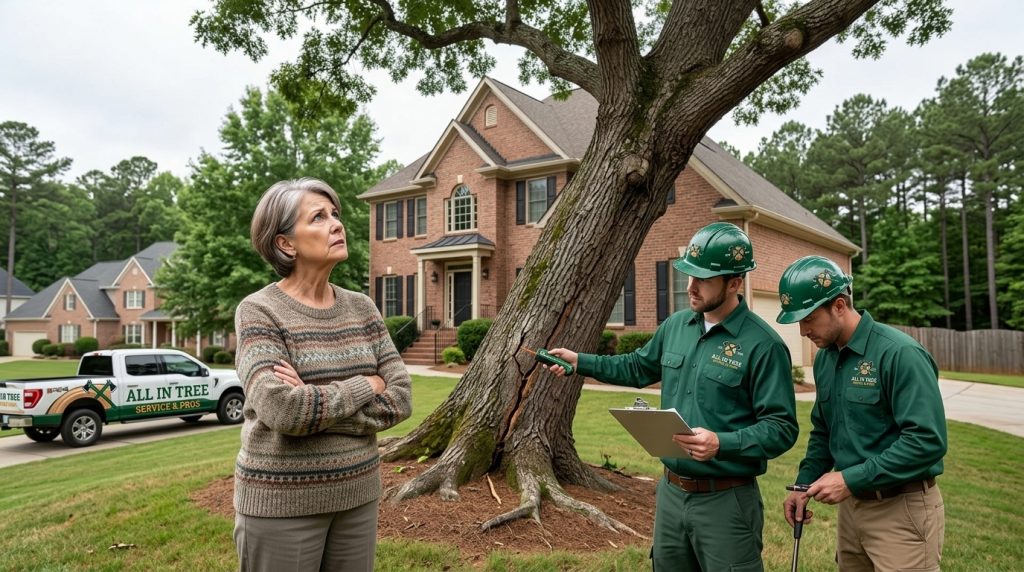
The article also identifies several causes of sudden leaning that property owners may not see at first. It says root damage from construction, saturated soil, root rot, storm impact, and soil compaction can all weaken a tree’s anchor and cause it to shift. The guide notes that in Georgia clay, long periods of rain can soften the soil enough to reduce the root system’s hold, especially in low areas and poorly drained yards.
“A tree that has leaned for decades and a tree that started leaning last week are two very different situations,” said Alex Laldin, Marketing Director for All In Tree Service of Hiram. “This guide was published to help property owners spot the signs that call for a closer look and to explain when a leaning tree may be monitored, stabilized, or removed.”
The published resource also gives readers a basic way to assess visible warning signs around a leaning tree. It points to cracked or heaving soil, a gap at the base of the trunk, exposed roots, vertical trunk cracks, fungal growth near the base, and soft or hollow wood as signs that a tree may be losing structural support. The article adds that a tree should also be checked after rain or wind because changing ground conditions can make a lean worse in a short period.
Another part of the guide focuses on lean angle and canopy weight. The article explains that a slight lean with no other signs of damage may be less urgent, especially if it developed gradually, but a stronger lean combined with soil movement, decay, or root failure raises the level of concern. It also notes that a heavy canopy on the side of the lean can place more stress on an already weakened root system and increase the chance of failure during a storm.
The guide does not present removal as the only answer. It states that some trees can be preserved through cabling, bracing, corrective pruning, or soil work if the root system remains sound and the tree’s structure is otherwise stable. In those cases, the article explains, the goal is to reduce movement and lower the load on weak points rather than reverse the lean itself. The post makes clear, however, that these methods do not correct major root failure or serious trunk decay.
The article also describes the conditions that make removal the more likely outcome. It says major root loss, visible lifting of the root plate, active changes in the lean, advanced trunk decay, and close proximity to a house all increase the danger. The guide explains that when several warning signs appear together, waiting can increase both the risk to the structure and the difficulty of the removal work.
To help readers understand the practical side of the issue, the post outlines several removal methods used for trees leaning toward structures. It describes directional felling for cases with enough open space, sectional removal with ropes for tighter lots, and crane-assisted removal for large trees over homes or where climbing would be unsafe. The article presents these methods as part of a planning process shaped by the lean direction, the space available, and the condition of the tree.
The company’s new guide also addresses stump removal and prevention. It notes that stump grinding may follow a removal so the area can be replanted or landscaped, and it states that grinding may also help after root rot by removing part of the affected material. The article then shifts to prevention by recommending regular trimming, better drainage, closer monitoring after construction work, and routine inspections that can identify decline before a tree becomes an emergency.
The release of the guide gives the company a timely way to address a problem that often becomes more visible after storms and heavy rain. Leaning trees near houses can remain unchanged for years, but the article explains that certain signs point to a problem that is moving rather than stable. By publishing the guide now, All In Tree Service of Hiram is framing the issue as one of early recognition and informed decision-making rather than last-minute response after property damage occurs.
All In Tree Service of Hiram states on its website that it provides tree removal, tree trimming and pruning, emergency tree removal, stump grinding, and bush and shrub trimming. The company also states that it serves residential and commercial properties in Hiram and offers 24/7 emergency tree service.
###
For more information about All In Tree Service of Hiram, contact the company here:
All In Tree Service of Hiram
Rudy Perez
(404) 882-6177
Office@AllInTreeServicesandPro.com
1706 Hiram Sudie Rd, Hiram, GA 30141